

Charting A New Direction for A Traumatized Liberia
By Syrulwa Somah
Atlanta, Georgia
May 13, 2004
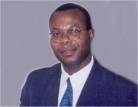
Syrulwa Somah, PHD
Back in the mid -19th century, British historian Lord Thomas Babington McCaulay showed endearing concerns for his cultural heritage when he said, "a people who take no pride in the noble achievements of remote ancestors will never achieve anything worthy to be remembered with pride by remote descendants." Lord McCaulay lived at a different period in history and his remarks were directed at the British people, but the essence of the message of his remarks is as real and forceful as ever in Liberian society today. I grew up in Liberia and I can easily identify with Lord McCaulay’s remarks, having known for a fact that many Liberians do not understand, value, and appreciate Liberian cultural traditions and practices. As a result, many Liberians think the problems of Liberia can be solved by borrowing outside traditions and practices, and not by relying on internal Liberian cultural traditions and practices.
As a product of traditional Bassa culture and Liberian society, I know firsthand the richness of Liberian cultural traditions, values, mores, and religious practices. I know that leadership practices in Liberian traditional culture did not differ much from the western system of democracy. The Bassa people, and people of the various ethnic groups in Liberia for that matter, freely elected their leaders and enstooled, enskinned or installed them as "watchers of the kingdom in accordance with the relevant customary laws and practices." The people stood in line behind their candidates of choice during elections. Each candidate for a particular office and his supporters were counted on the spot, and the candidates with the highest votes won the elections. The electoral system was free and fair, even where the conduct of the elections and the counting of the votes took weeks to complete.
The people were key in traditional Liberian cultural practices. The people were regularly consulted for their suggestions and inputs regarding major programs, projects, and policy decisions affecting the entire town, village, or kingdom. The people knew a major decision was at stake whenever the towncrier called out to the town’s people to "follow the road." Every town’s man, woman, or child also knew that "follow the road," meant that the council of elders was about to debate an issue of consequence crucial to the survival and well being of the town that needed the urgent input of everyone. And no doubt current growing discontent, insecurity, and poor standards of living in Liberia today might have been just one of those cases in which the council of elders would mandate the towncrier to signal to all Liberians to "follow the road." But the directive to "follow the road" is much deeper in meaning than most educated Liberians might appreciate, so I thought the title, "Charting A New Direction for a Traumatized Liberia" would be more clearer and appreciated by all Liberians and non-Liberians alike.
First, the unique circumstances of Liberian history resulted in an overwhelming infusion of western culture and traditions in Liberian society such that no one in his or her right mind could sincerely ask Liberians to reject western culture outright because that would be suicidal. At the same time, no one in his or her right mind could also advocate for the wholesome westernization of Liberia because that too would equate to "self-imprisonment." Liberian history therefore dictates that we must embrace both traditional Liberian culture and western culture with the goal of extracting from each culture those ingredients that would yield the most benefit to all Liberians. Hence, as we embark on new sweeping changes for a better Liberia beyond 2005, we must consider carefully those cultural mores of national stability, peace, belongingness, loyalty and nationalism, which were the very fulcrums our forefathers relied on to promote good governance, civil discussions, unity, and peaceful elections. We must symbiotically join together and contribute meaningfully to the good fight of our forefathers so as not only to make ourselves proud as a nation and people, but also to make those ancestors whose footsteps we are walking in proud during and after election 2005.
All Liberians must board the ship of brotherhood and nationalism and sail for a better Liberia in 2005 and beyond, with the full knowledge that the process of selecting one’s national leader is a cultural and moral value determined by each culture. The name under which these changeable moral rights or electoral processes unfold is always arbitrary, and in no way determines the hallmark of a free society. The ability of citizens or individuals to associate with other like-minded individuals, organizations, and associations to express their views, petition their national governments, and establish a system of good governance and rule of law is what matters the most. So if our nation does not get wrapped up in all the noises and emotions about democracy and take its time and objectively look at our system, we will see that our traditional system had similar electoral rules and governance processes as the modern democracy.
For instance, if you ever visited the Liberian countryside and observed the daily lives of our people, could you sincerely say they were not in charge of their daily lives? Did they not influence their historical fate through their social and political institutions like the Sande and Poro Universities? Surely, you did. But the premise for these rhetorical questions is to make the point that government and election, as we know them today, are two of every human race’s oldest and most important institutions. From antiquity, some kind of government with elected or ascribed leaders have always been an integral part of every society, and Liberia is no exception. So the concept that human beings are divinely created equal and given changeable moral rights as opposed to "unalienable rights" to live and elect whomever they want to lead them did not originate with the Americans and Europeans.
For example, if we took a closer look at the American Declaration of Independence, it argues, "all men are created equal and are endowed by their creator with certain unalienable rights…" But what the Americans did in their declaration of independence was to paraphrase the universal moral rights of the human race in a cultural context for their own understanding and edification. No one can therefore discredit American founding fathers for making a good attempt at converting universal moral rights into a national cultural institution and political philosophy known and styled as the Jeffersonian democracy. And this is the kind of practical application of universal human and moral rights that Liberians ought to adopt in line with traditional Liberian culture.
Liberians must take charge of building our nation by using an electoral process and form of government that befit our cultural values and political realities. One person, one vote, as well as the counting of every vote cast during an election fairly and squarely without prejudice were conspicuous when our traditional forefathers elected their kings, chiefs, and other leaders. In fact, voters stood behind their candidates of choice during elections and the persons with the most votes always won. There was never a time when the leader elected had more votes than the entire population as in the case of CDB King in Liberia, or the person with the most votes lost the elections as in the case of Al Gore in the United States.
It is therefore unarguable that democracy, whether in a traditional or a modern sense, always meant a "rule of the people," that is a system in which the people are truly in charge of their daily lives and can influence the course of their own historical fate. For example, the Greeks saw democracy as a "government by the people," the Latin saw democracy as "the public affairs," and the Roman saw democracy as "a system of government in which both the people and their rulers are subject to law." Even Aristotle and other philosophers saw democracy as "a government of laws and not of men." As a result, the Jeffersonian Electoral College electoral system of democracy is unique to Americans, and the European parliamentary electoral system is unique to Europeans. But it is difficult to tell which electoral system is unique to Liberians. There is none because we have continued to build monuments in honor of our conquerors instead of joining forces to produce an electoral or democratic system that is unique to us, in accordance with our cultural and moral values as Liberians.
Yet we say we want democracy in Liberia without knowing which type of democracy is good for us. As a result, we continued to fight amongst ourselves and destroy our country in a general lack of direction. The Greeks, Romans, and others had difficulty with defining "democracy," and Liberia will surely have difficulty defining "democracy." We in Liberia "misappropriated" the word democracy in the past, we have continuously "misappropriated" the word democracy in the present, and we will continue to "misuse and misapply" the word democracy in the future if we continue to see modern democracy as an American cultural value worth copying. The fact of the matter is Americans, Europeans, and others succeeded in defining democracy in the context of their cultural values and developmental aspirations, and Liberians must learn to do the same.
The traditional African political philosophy of Non-partysim was an emblem of good governance and national unity in traditional Liberian society because it meant upholding our cultural values and mores. Thus, when it came to fair election, spirituality, communalism, mutualism and councilism - the idea of "you watch my back and I watch your back"-our people were greatly united than the rest of the world. So the mushrooming of political parties in our nation today is a direct result of borrowed American and European cultural values. Even the United States - with a population of nearly 300 million people - that we are trying very hard to imitate has only two principal political parties and never stops strangling the growth of a credible third party. Yet Liberia, with a population of less than four million people, has 18 political parties and we still wonder why we are divided.
Divergence of views did not lead to forming multiple political parties in traditional Liberia. National development objectives were decided upon and attained through consensus by finding a common ground and assembling the best brains or human resources in society. And this is the very societal cooperation I called "Councilism" in my most recent book, "Nyanyan Gohn Manan: History, Migration and Government of the Bassa." Councilism was part and parcel of Non-partyism, as Non-partyism was primarily associated with the notion of a relatively homogeneous people highly conscious of their values as a people. But many Liberians alive today have departed from our cultural cohesion and conspicuous sense of shared heritage. Instead, we have spent the last 156 years of our national existence as a nation and people in promoting a society of social and political inequalities, dominated by a multitude of political parties gravitated toward individual enclaves and "cult personalities." As a result, Liberia now has nearly two-dozen political parties whose goals and contributions to the Liberian society remained meaningless. The table below shows only the number of political parties and presidential candidates that participated in the 1997 Liberian special elections, as 18 political parties are operating in Liberia today:
Presidential Candidate |
Political Party |
Chea Cheapoo |
Progressive People's Party (PPP) |
Martin M.N. Sheriff |
National Reformation Party (NRP) |
Fayah J. Gbollie |
Free Democratic Party (FDP) |
Harry F. Moniba |
Liberia National Union (LINU) |
Ellen Johnson-Sirleaf |
Unity Party (UP) |
Alhaji G.V. Kromah |
All Liberia Coalition Party (ALCOP) |
Charles Ghankay Taylor |
National Patriotic Party (NPP) |
Cletus S. Wotorson |
Alliance of Political Parties (Alliance) |
Henry B. Fahnbulleh |
Reformation Alliance Party (RAP) |
George T. Washington |
People's Democratic Party of Liberia (PDPL) |
Gabriel B. Matthews |
United People's Party (UPP) |
George E.S. Boley, Sr. |
National Democratic Party of Liberia (NDPL) |
Togba Nah Tipoteh |
Liberia People's Party (LPP) |
Proposed Practical Solutions
Unlike many Liberians, I do not believe that the only way to contribute to the rebuilding of Liberia is through the presidency. This is truer today than ever before. Not everybody is a capable leader or can solve our problems as a nation, but everybody pretends to be one. There is no soul in Liberia today that does not regard itself as deserving anything less than Liberian presidency. There are also some Liberians who are willing to destroy all other Liberians just to become president. Then there is another group of Liberians who think the Liberian presidency is their birthright. And the list goes on. But regardless of how one feels, it is expected of all Liberians to come up with transparent practical solutions to this hunger for the Liberian presidency. And the best solution is to create an electoral system that is fair and transparent. But all Liberians must search deep into their souls and in history to find the clogs in the present electoral system and engineer the clogs out just as our ancestors did with minimal conflicts when confronted by political decisions.
Of course, our ancestors did live in a different time period far removed from our modern world. But the foundation they laid for fostering political stability can be revisited, as a process that produces peace cannot be old. So let us blend some of the traditional cultural practices and the western cultural practices to create a new system. Hence, I wish to propose a "Tetrahedron Primary" system, or a four-step electoral system that could ease our electoral confrontations:
· First primary
· Second primary
· Run –off primary
· Final election
In the first and second primaries, only candidates with the highest votes, say 40-45 percent of the popular vote, can move into the next round of voting. The third or runoff primary would be restricted to cases in which three candidates are evenly tied in the number of popular votes. No run-off primary election would be permitted even if a candidate wins by a single (one) vote margin, as long as the national elections commission can certify the first or second primary election was free and fair and both the process of the elections and the election results are verifiable. In other words, if majority of the votes cast can be verified, the losing candidate’s bid for the presidency or whatever office he or she was seeking would respectfully be over for that particular election. Run-off elections may be necessary only if three candidates emerge from the second primary with nearly equal votes of say 48 percent of the popular votes for two of the three candidates, and 47 percent for the third candidate.
In this case, the two candidates with 48 percent of the popular votes would be eligible for the run-off primary, and the candidate with 47 percent of the popular votes would be effectively disqualified from running in the next rounds of the elections. Such free and fair electoral process could minimize civil strife and destructive radicalism, and eliminate any violent acts against the nation because the people would have freely spoken with their votes. The will of the Liberian people would also be clear at this point, and both the winning and losing candidates would do well to respect the will of the people. A losing will still have the rights to challenge the elections results in a Liberian court of law, nonetheless. And anyone who looses the national election after all possible legal challenges must endeavor to work for attainment of the national development objectives of the Liberian nation and people.
Practical Solution I: Voting and Voters Education
People are the key to every local or national election. Without the involvement of the people, there can be no elections. And this is why it is very important for any credible elections to rely on an accurate count of the number of people available to vote at all times. In Liberia, the responsibility to count all eligible voters rests with the national elections commission. The commission must not only ensure that voters are duly registered to vote, but must also endeavor to educate the voters on their rights and responsibilities as voters. For it would be awkward if we had 500,000 registered voters and the elections results showed that one million persons participated in the elections, or the votes of half of the 500,000 registered voters were discarded because the voters did not understand the voting rules.
Voter’s education is therefore crucial to the success of any democratic elections, in regard to the number of registered voters as a percentage of the total population. And this is why I want to impress on all Liberians to realize that voting influences our quality of life not only in setting national policies and electing our local and national leaders, but also in promoting cooperation and respect between the electorate and the elected. In other words, voting must be orderly and transparent in such a way that it becomes a tool of cooperation and not a tool of division. And this is why education about voting must be part and parcel of Liberian junior and senior high school curricula so that the voter’s registration message can get across to all Liberians at an early age. Having Liberians to cast their votes during local and national elections under a voting system they do not understand will continue to hurt and not help the Liberian nation and people.
Unquestionably, Liberia has an electoral system. But if the question were why the Liberian electoral system has not functioned properly, the obvious answer would be that Liberians have not permitted the system to function properly due to deep divisions, resentment, and suspicions. Invariably, the voting process, the transporting of ballots, the shortage of ballot papers, the deprivation of political party supporters of their right to vote, and the early closings of polling stations have been at the epicenter of disgruntlement and dissatisfaction with our electoral system. Therefore, we need to ask ourselves how these irregularities seeped into the Liberian electoral process, and how best we can together correct these irregularities or imbalances for a secured future for all Liberians.
For me, I think the solution is obvious. We need to establish a regional voting division in each of the 15 counties to handle the counting of ballots during each local or national election. The National Election Commission will then be required to provide voters’ education (see details under subheading The Elections Commission and Voters’ Education) to citizens in each county, and to train the staff of each local regional division in handling and tabulating votes (ballots). This approach, I believe, would remove any elements of surprise in the vote counting process, and remove the need to transport ballots to Monrovia for counting purposes.
Practical Solution II: Electoral Regions of Liberia
I believe the current Liberian electoral system is unnecessarily complicated, when the system could have been simplified to accommodate all Liberians with ease. We could establish coordinated regional electoral systems to not only ensure the fairness and transparency of the local and national elections in Liberia, but to also minimize the high costs of transporting ballot boxes and election commissioners back and forth from Monrovia during elections. So I believe the most efficient and practical solution to this problem is to create three electoral regions in Liberia to include a West Region, a Central Region, and an East Region. With the establishment of these regional voting divisions, national elections such as those for president and legislators could then be conducted sequentially in each region on specific dates as represented in the table below:
West Region (Voting Day One) |
Central Region (Voting Day Two) |
East Region (Voting Day Three) |
Grand Cape Mount |
Grand Bassa County |
Grand Gedeh County |
Lofa County |
Bong County |
Maryland County |
Bomi County |
River Cess County |
River Gee |
Montserrado County |
Nimba County |
Grand Kru County |
Gbarpolu County |
Margibi County |
Sinoe County |
Practical Solution III--Regional Voting Points
An equally problematic issue relating to Liberia’s electoral process is the lack of electoral points. I believe the electoral process could be made much easier if electoral points were assigned to each political subdivision of Liberia, and if candidates desiring elected office were to vie for those electoral points. For example, let’s say if a presidential aspirant needed a majority of "county electoral points" to win the presidency, the voters would have a clear choice of the winner based on the ranking of each presidential aspirant in the context of county points accumulated from county number 1, 2, 3, and so forth. This kind of points system, or what I would call "Pictorial/Choice voting" is a simple format that should provide fair results even if the elections were independent, partisan, or Non-partyism.
Non-partyism, a traditional African philosophy of governance, holds that political decisions are better valued when the best brains of a nation are grouped together to work for national development and to openly debate possible options to derive consensus in order to fairly distribute national resources. In other words, in a system of democracy or Non-partyism, consensus is always key to the success of the system, even if consensus were developed solely in the mind of the individual. The essence here is that in a county point system as the one being proposed, a voter could rank as few or as many presidential aspirants as possible, realizing in advance that only candidates with the highest county points could go onto the next round of voting, as the winner of a particular election would eventually be determined by the number of county points. And this process of elimination could minimize conflicts about disputed elections.
Another teaching of Non-partyism is that good rules cannot by themselves heal social rifts, but good rules can accurately move forward all opinions within the electoral process. So in my view, the best chance for the 2005 election would be an electoral system geared toward political moderation and promotion of a governance structure tilted toward centrally balanced national policies and programs. In this light, I have presented below a county electoral point system not based on each Liberian county’s geographical size, but on the population of each county in relation to data available from the 1984 national referendum in Liberia. The only exception to this rule is the two new counties of Gbarpolu and River Gee, in which case population and county points were projected based on geographical size. Also, current Liberian population is projected at somewhere between 2.8 and 3.4 million people, and county electoral points are limited to a 100 percent statistical range.
County |
Population (1984 Figures) |
County Electoral Points |
Montserrado |
525,475 |
10 |
Nimba County |
393, 404 |
9 |
Bong County |
259,412 |
8 |
Lofa County |
245, 901 |
8 |
Grand Bassa County |
150,016 |
7 |
Margibi County |
123,532 |
7 |
Grand Gedeh County |
104,943 |
7 |
Bomi County |
94,813 |
6 |
Maryland County |
93,493 |
6 |
Grand Cape Mount County |
93,094 |
6 |
Sinoe County |
73,568 |
6 |
Grand Kru County |
43, 378 |
5 |
Rivercess County |
22,000 |
5 |
Gbarpolu County |
20,000 (projected) |
5 |
River Gee County |
20,000 (Projected) |
5 |
|
|
100 % |
Practical Solution III: The Elections Commission and Voters’ Education
As I mentioned earlier, voters’ education is very crucial to the electoral process in Liberia. The National Elections Commission must build on the blueprint of the Liberian Rural Communication Network (LRCN) to undertake a voters’ education drive tailored to the people in each Liberian county. Accordingly, the elections commission should liaise with the traditional friends of Liberia, including Germany, Canada, Great Britain, and the United States, to secure SBS-1 Radio Station in a Suitcase C/W 100 Watt FM Stereo units for each county. At $4000 per unit, 15 SBS-1 Radio will cost $60, 000 in equipment, excluding installation and training. The SBS-1 radio has local range (25-50 km radius) or frequencies less than 1000 MHz, but can be improved to cover more km radius. There is even a greater need to send out additional proposals for 500,000 wind-up, solar powered radios or a solar panel and rechargeable battery unit which lasts up to ten years, to be used in the voters’ education process. At current estimates, the solar panel and rechargeable battery cost $2 to $3.00 each, while solar powered radios cost about $25.00 each, and the fact that the radio depends on sun energy to run would be very helpful to our people during the elections as money is scarce in Liberia nowadays. Finally, a geographically or a centrally-focused national radio system buttressed by relays or micro-bin throughout the nation to facilitate complete coverage of the elections would be ideal for this purpose.
Here, regardless of which radio units the elections commission acquires, the main purpose for each radio unit MUST be to broadcast accurate and objective news to the Liberian people in their various Liberian languages, about voters’ registration, voter’s responsibilities and limitations, and general personal and national development information. In that context, the theme of the radio broadcasts must center on:
· Educating each ethnic group in the language of their understanding from their county headquarters
· Voters registration
· Get the vote out
· National development message
· Programming for health education
· Cultural promotion
· National unity message
· Agricultural message
You see, Greek philosopher Aristotle once said, "Democracy is when the indigent, and not the men of property, are the rulers." So which other way could we promote and educate indigent Liberians about democracy than in their own languages through the magic of radio? Radio is an influential communication device that plays a crucial role in public education, and all Liberians would do well in 2005 by using these participatory communication approaches. The strength of rural radio as an extension tool of communication lies in its ability to reach a wider audience of unlettered voters in the languages they understand. I am not proposing that technical information be simply read to the people over the airwaves. I am interested in the kind of broadcast and translation of technical information about voting and other subjects that the people will understand and discuss within their cultural context at the community or town level.
I believe there is a need in Liberia today for full citizen participation in every aspect of national life and governmental policy issues. Current illiteracy rate in Liberia stands at between 65 and 80 percent, yet the bulk of Liberian radio frequencies do not extend throughout the country. As a result, the BBC and other foreign news outlets are the main sources of news, which in most cases include political news and not socio-economic news about Liberia. Such a situation does not sit well for national unity and development if Liberia must make any inclusive headway for a better beginning in 2005 and beyond. And we cannot continue to permit this kind of scenario to play-out in the new Liberia.
The French philosopher, A. D. Benoist once stated correctly, "The highest measure of democracy is neither the extent of freedom' nor the extent of equality', but rather the highest measure of participation." In essence, there is an important difference between knowledge and information. Previous elections in Liberia paid more attention to supplying information rather than developing a knowledge base that will support and enhance lasting political participation through self-empowerment radio. Focusing on gathering information rather than developing knowledge to use the information does not work at all. It is always very important to create environments that are conducive to knowledge sharing and network building among all Liberian voters. In other words, the diversity of Liberian society has yet to be adequately recognized, and without this recognition, active citizenship participation cannot be expected to take root in Liberian politics and in education of the electorates.
Hence, for the 2005 general elections to be all-inclusive we need to establish a media landscape throughout Liberia to educate the Liberian people about their rights and responsibilities as voters. Each major language in each of the 15 counties should have its own independent radio stations at the county level to explain the process to potential voters. Portable radio stations would become highly valuable for interacting with specific disadvantaged groups and for even handling complex social and political problems.
Conclusion
Democracy and an efficient voting system take time to develop. The electoral college voting system in the United States, and the parliamentary voting systems in Great Britain, France, Germany, Israel and other places that we so greatly admired took years to develop. Liberians can do the same. We need to develop a democratic voting system that relies on the cultural values, traditions, and political realities of Liberia. And this is the very reason why I think an electoral system based on regional voting blocks and county electoral points would empower all Liberians at the polls, and minimize or eliminate any chances for votes rigging. Only the candidates with the highest votes in each preliminary round of voting would advance to the next rounds in each national election until a president, senator, or representative is elected. This way, the Liberian people would always know the candidates who are ahead in the polls, and they will be prepared to resist votes rigging at the polls in one form or another.
With the Liberian people monitoring the elections, candidates for public office will then be inclined to debate their platforms publicly if they want to be elected. I am therefore asking all those who have good hearts for Liberia to add to these suggestions. Liberia needs to utilize its best brains to find practical solutions to the many problems confronting our nation. Liberia does not need knee-jerk reactions to her problems, nor unending battles of verbal exchanges. If you are lawyers, economists, unifiers, political scientists, nationalists, soldiers, and the like. Liberia needs the best from her sons and daughters. Liberia needs to know the "books" you have written that can be applied to the developments of Liberia, and not how many books or theories and philosophies you have read. For the books you have read are meaningless to the development of Liberia unless you can apply the knowledge gained to make our nation better.
So, tell me, "Are you a Liberian?" Is there any Liberian among you? Are you willing to help develop Liberia?" Well, if you are, I want to let you know that all Liberians can join forces to prevail over entrenched opportunistic politicians, warlords, and privileged elites who have ruthlessly exploited all of us and Liberia. We have had first republic, second republic, third republic and the soon-to-be fourth republic. We can make this fourth republic of Liberia and its "new" leadership the oasis of freedom, justice, peace, and equality for all Liberians. The "new leadership" that Liberians are yearning for should emerge as a fearless and outspoken champion of the masses. We have suffered so long under inefficient national policies and now is the time to find practical solutions to our problems. Liberia does not need another untested savior occupying the Executive Mansion to preside over the status quo. In the upcoming fourth Republic we must ensure that no Liberian special interest group lives the good life parasitically by exploiting the Liberian masses and pillaging our natural resources.
Let us look forward to election 2005 to unite ourselves and ascend from the dungeon of self-destruction to the highest pinnacle of development for the common good of our people. I am willing and capable to work with those who are in charge of the upcoming election to put this plan in action before 2005 election. We all know that there are many of you out there who can help our nation. Give yourselves and your contributions to Liberia. Let us not let our nation suffer another stroke in 2005. Liberia needs all of your suggestions so that we can take our case directly to the Liberian people regarding how a fair election can be held. We are the ones who are crying, dying, and staving day-in and day-out. Brothers and sisters, we are the ones who are bleeding and bloodletting. We are the ones who are being infested with HIV, water-borne diseases, gang rapes, ritualistic killings, and material exploitations and degradation on the world stage. The time is ripe to grab the cow by the horn and come up with practical solutions for the cancer-like problems in Liberia.
I need not remind you that men and women can fall down. All nations can also fall down; hero and heroines can fall down, and a boxer can fall down and loose a championship fight. But the challenge is whether or not a person chooses to rise up or stay down after falling. And this is the main challenge for the Liberian nation and people today. We have been on the ground for well over 150 years. We have lived through worst times in the last 14 years. It is time now to say we are tired with staying down. We need to get up and find out what we want, what we don’t want, and what we expect for the future. After all, at the end of the day, it is our dedication, integrity, devotion, hard work, and contributions to the "new Liberian republic" that will matter beyond 2005.
Syrulwa Somah, Ph.D., is an associate professor of occupational safety and health at a local university in Greensboro, North Carolina. He is author of several books, including, The Historical Resettlement of Liberia and It Environmental Impact, Christianity, Colonization and State of African Spirituality, and Nyanyan Gohn-Manan: History, Migration & Government of the Bassa (a book about traditional Bassa leadership and cultural norms published in 2003). Somah is also the Executive Director of the Liberian History, Education & Development, Inc. (LIHEDE), a nonprofit organization based in Greensboro, North Carolina. He can be reached at: somah@ncat.edu
